
NVIDIA’s chip-factory vision keeps engineers at the centre
NVIDIA is linking faster simulations, predictive AI and virtual factories into a broader vision for chip manufacturing. Its latest examples focus on helping engineers explore changes before putting them into production.
Published · Earlier report
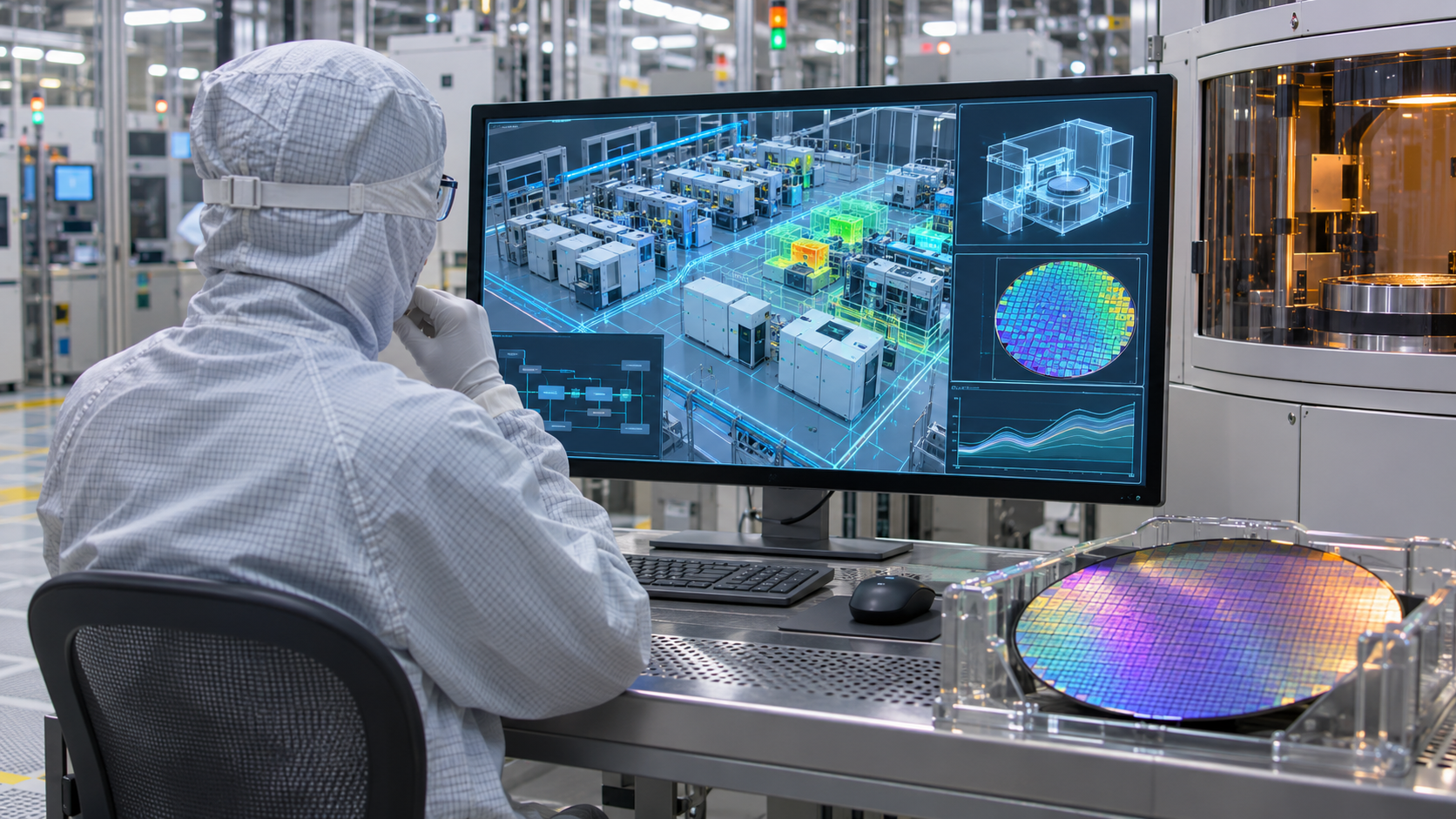
More experiments, fewer physical trials
NVIDIA’s latest manufacturing update describes a connected set of engineering tools. Faster computing can make simulations less time-consuming; physics-based AI can estimate some outcomes without repeating an entire calculation. The company also points to software agents that carry out steps within an engineering workflow.
A virtual factory before a real change
One example is Applied Materials’ use of NVIDIA Omniverse to model a factory digitally. The idea is to explore layouts, material flows and possible bottlenecks before changing the physical site. NVIDIA also describes work involving COMSOL, Lam Research, Siemens and Advantest across simulation and testing.
What to take from the announcement
This is a company account of tools and collaborations, rather than independent proof of gains across the industry. The useful distinction is between modelling an option and authorising it for production: NVIDIA’s description leaves engineering decisions with people. Any reported acceleration still needs to be read in the context of the particular workload.
Where this comes from
This report is based on the reporting and source material below. Announcements and company claims are attributed, rather than treated as independent tests.
- NVIDIA Blog — AI Is Changing How Semiconductor Fabs Work — and Engineers Are Moving Faster Because of It ↗Published 3 November 2026
Something needs correcting? Report a correction.